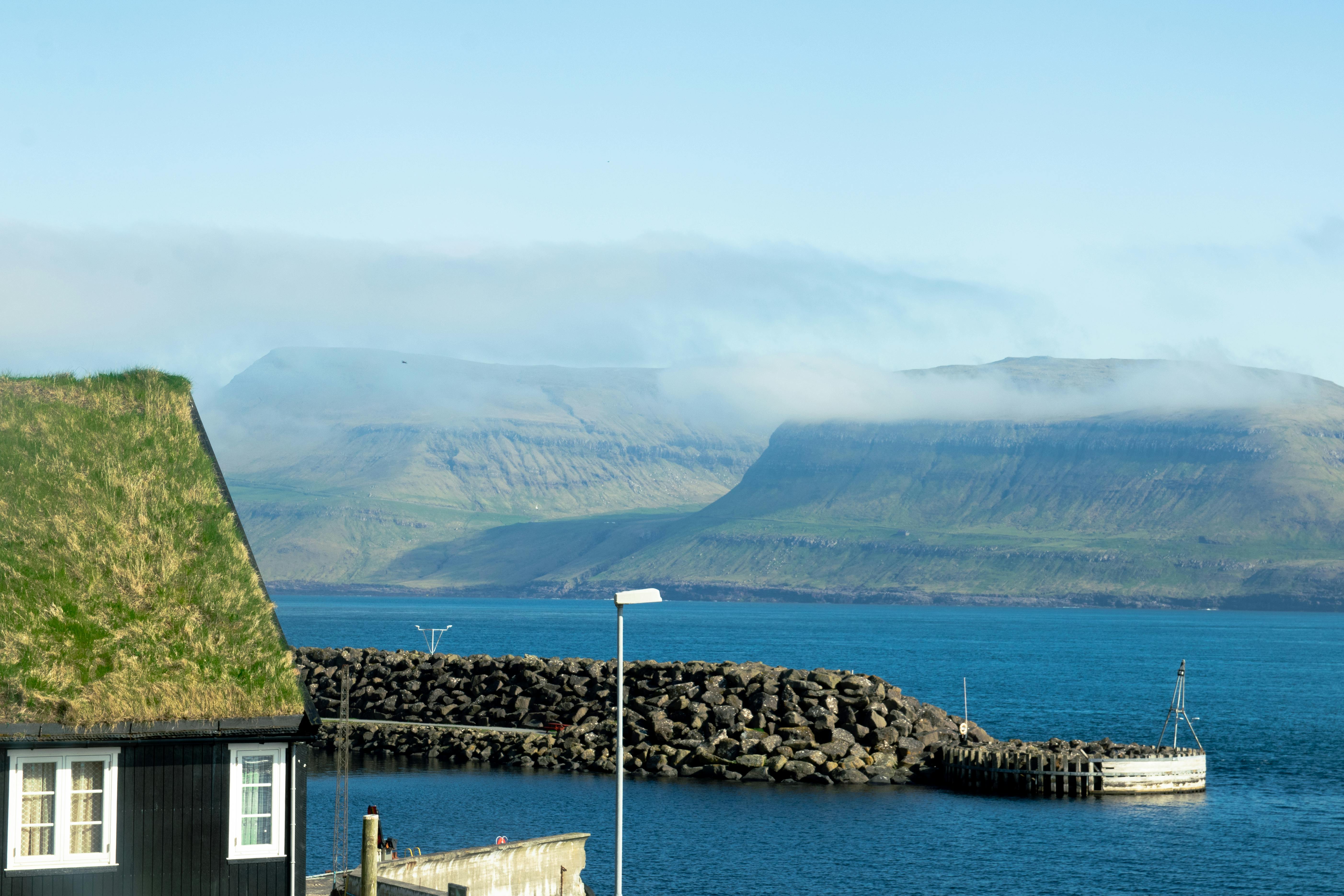
The short answer: June to August is the best overall time to visit the Faroe Islands — the mildest weather, the longest days (close to 20 hours of daylight) and prime puffin season.
For fewer crowds: late May, June or early September. For the northern lights: November to February (low odds, but possible). Peak & priciest: July.
The Faroe Islands sit at 62°N in the middle of the North Atlantic, where weather is famously changeable and daylight swings from barely 5 hours in winter to nearly 20 hours in summer. There is no single perfect month — the best time depends on what you want to see and do.
Find your best month
Pick what matters most and we'll highlight the ideal months in the table below.
Faroe Islands weather by month
Average figures for Tórshavn. Temperatures are mild but cool all year — even peak summer rarely tops 13°C (55°F) — and rain is frequent, so treat these as guides.
| Month | Avg High | Avg Low | Rainfall | Daylight | What it's like |
|---|---|---|---|---|---|
| January | 7°C / 45°F | 3°C / 37°F | ~158 mm | ~6 hrs | Coldest & darkest, stormy, aurora chance, very quiet |
| February | 7°C / 45°F | 3°C / 37°F | ~130 mm | ~9 hrs | Cold, snowiest month, dramatic, aurora chance |
| March | 7°C / 45°F | 3°C / 37°F | ~130 mm | ~12 hrs | Days lengthen fast, late aurora, birds returning |
| April | 8°C / 46°F | 3°C / 37°F | ~90 mm | ~15 hrs | Spring greens, first puffins arrive late month |
| May | 9°C / 48°F | 5°C / 41°F | ~60 mm | ~17 hrs | Driest, wildflowers, puffins back, fewer crowds |
| June | 11°C / 52°F | 8°C / 46°F | ~57 mm | ~20 hrs | Longest days, puffin peak, great hiking, festivals begin |
| July | 13°C / 55°F | 9°C / 48°F | ~70 mm | ~18 hrs | Warmest, peak season, busiest & priciest, Ólavsøka |
| August | 13°C / 55°F | 9°C / 48°F | ~80 mm | ~15 hrs | Warm, puffins to early Aug, late Aug quieter |
| September | 11°C / 52°F | 8°C / 46°F | ~110 mm | ~12.5 hrs | Mild, autumn colours, fewer tourists, some aurora |
| October | 9°C / 48°F | 6°C / 43°F | ~147 mm | ~10 hrs | Wet & windy, aurora season starts, quiet |
| November | 8°C / 46°F | 4°C / 39°F | ~140 mm | ~7 hrs | Dark, stormy, prime aurora window, very quiet |
| December | 6°C / 43°F | 3°C / 37°F | ~135 mm | ~5 hrs | Shortest days (sun sets ~3pm), snow, aurora, festive |
Sources: long-term Tórshavn climate normals (Weather Atlas, climate-data.org, nomadseason). Daylight rounded; Tórshavn ranges from ~5 h 15 m at the December solstice to ~19 h 35 m at the June solstice.
The Faroe Islands season by season
Spring
Cool but brightening, with rapidly lengthening days and the first puffins in late April.
- Wildflowers and returning seabirds
- Driest stretch begins in May
- Fewer visitors, lower prices
- Some snow possible into May
Summer
The best all-round window: mildest weather, ~20 hours of daylight, puffins and full ferry schedules.
- Peak puffin viewing on Mykines
- Best hiking and long evening light
- July is busiest & most expensive
- Ólavsøka festival in late July
Autumn
Mild, moody and quiet, with golden hillsides and a first chance of northern lights.
- Far fewer tourists than summer
- Atmospheric light for photography
- Some attractions close from late Sept
- Wetter and windier than summer
Winter
Dramatic and snow-dusted, with the best (if low) aurora odds — but short days and storms.
- Best northern-lights window
- Snow on cliffs and turf roofs
- Only ~5–9 hours of daylight
- Ferry cancellations; book ahead
Timing the highlights
Best time to visit FAQ
October through April (excluding holidays) tends to have the lowest flight and accommodation prices, though winter brings short days and unpredictable weather. May and September balance cost and conditions. Estimate yours with the Trip Cost Calculator.
Yes, mainly December–March, with February typically snowiest. It rarely lies deep for long at sea level, but mountains and turf roofs can look spectacular.
Not a true midnight sun — at 62°N the sun dips below the horizon — but around the June solstice there are up to ~19–20 hours of daylight and the brief night stays in twilight.
Whatever the season: waterproofs, warm layers and windproof outerwear. See the Packing Checklist.